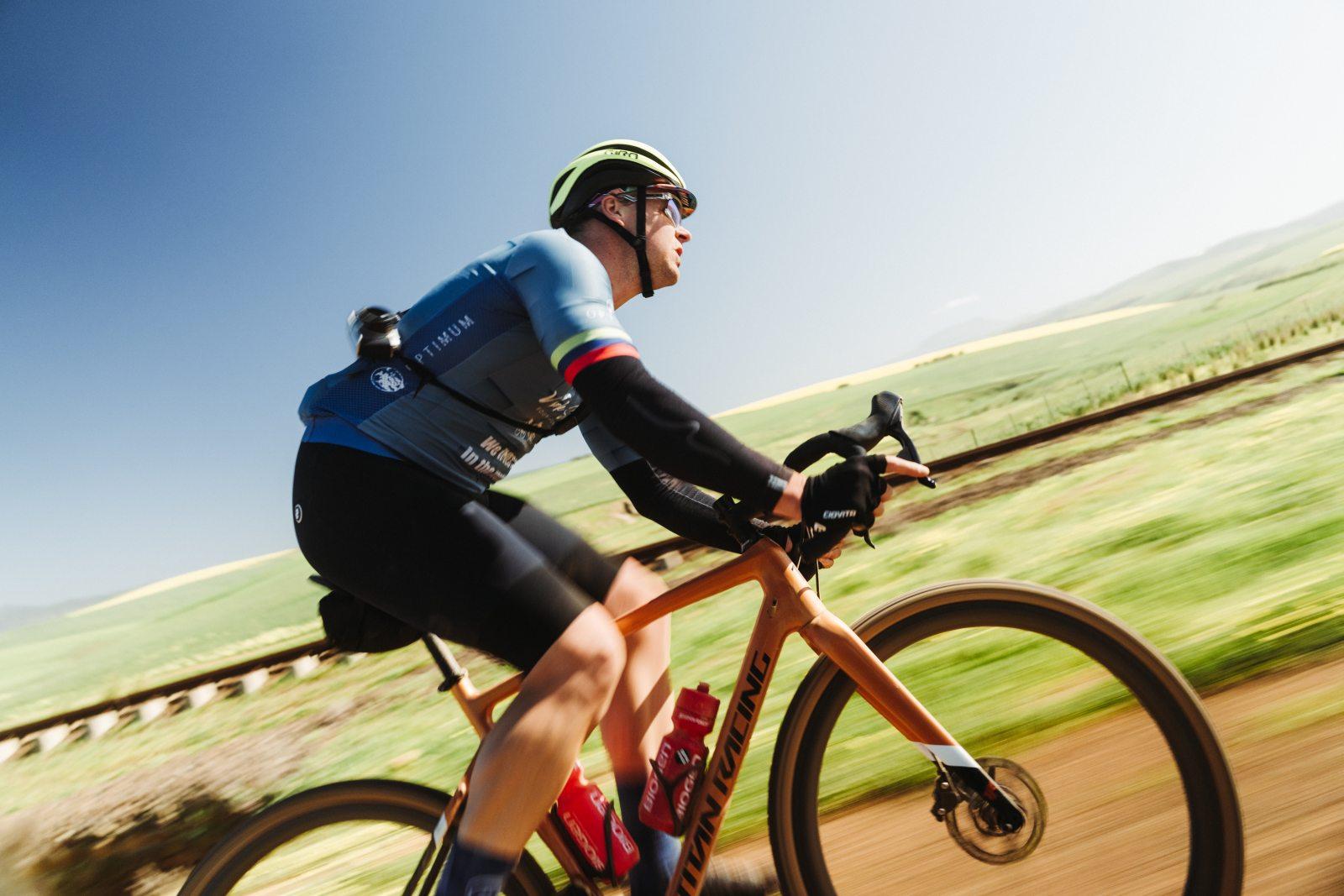
TAKE TEN: Kyle Blewitt

Wildlife photographer, Kyle Blewitt, might find himself based in Switzerland, but his heart is firmly planted in the African bush. From a (very) close encounter with an elephant bull, through to a literal lion’s share, we chatted to him about his love of shooting the essence of nature.
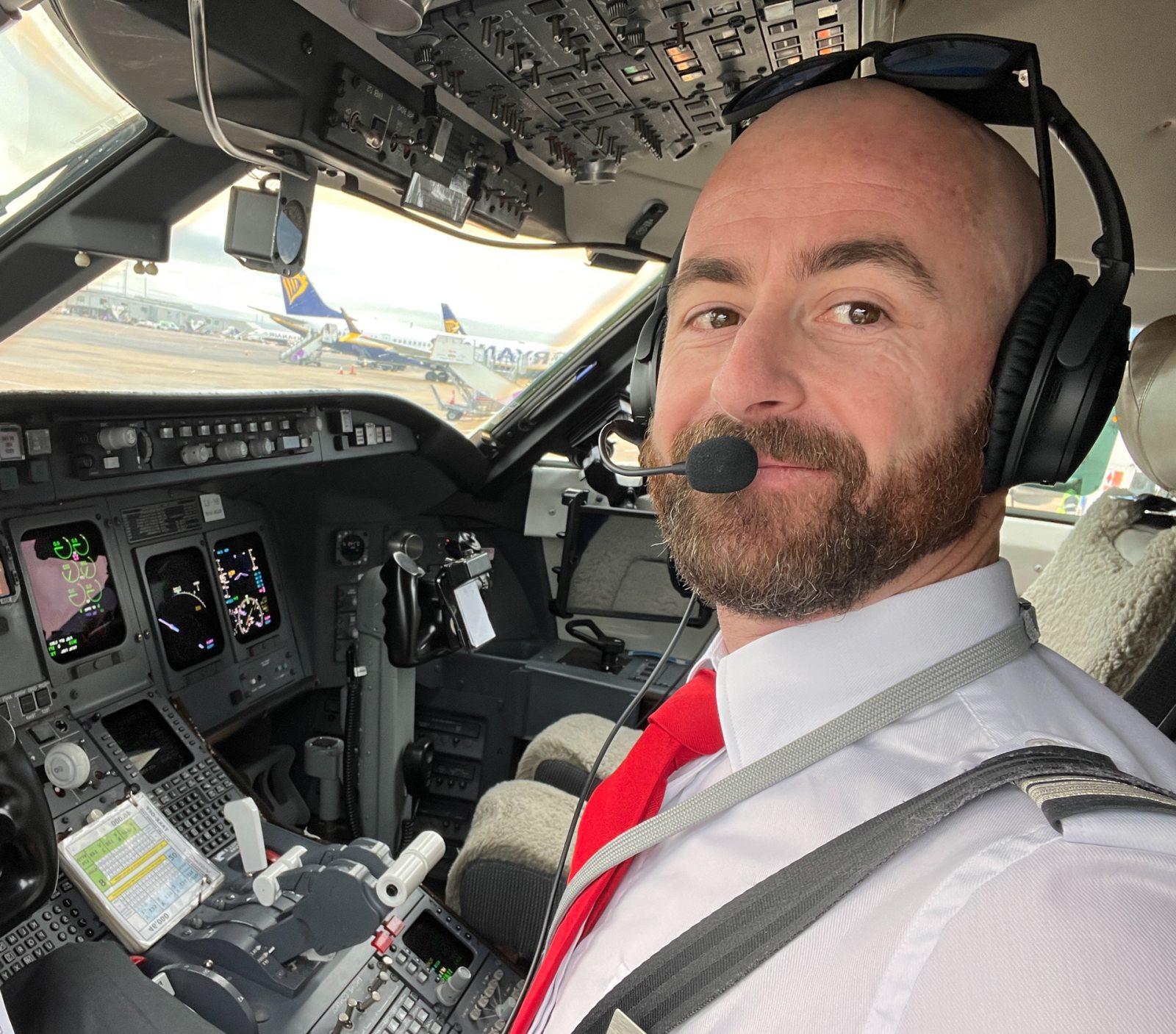
Kyle Blewitt
Hi Kyle! Please tell us a little about yourself and your photography.
I grew up in South Africa and currently live in Switzerland, where I’ve been based for the past eight years. As often as possible, I travel back to South Africa to spend time in the reserves and outdoors, pursuing my passion for wildlife photography.
My working hours are spent in the cockpit, flying across Europe, North Africa and the UAE. Before that, I spent many years flying throughout Africa and India on humanitarian and survey missions and even spent time in the Seychelles flying for a marine conservation organisation.
Photography has been a passion for as long as I can remember, and once I got onto the Fujifilm train, I never looked back. I do miss being based in Africa, as I don’t get to shoot as much as I’d like, but that’s life and I take what I can get.
However, my family and I have plans to return to South Africa. We’ve started a tour company that focuses on ethical and eco-friendly safaris, including photographic safaris. Our aim is to educate and immerse first-time travellers and allow them to explore South Africa’s incredible wildlife, heritage and landscapes.
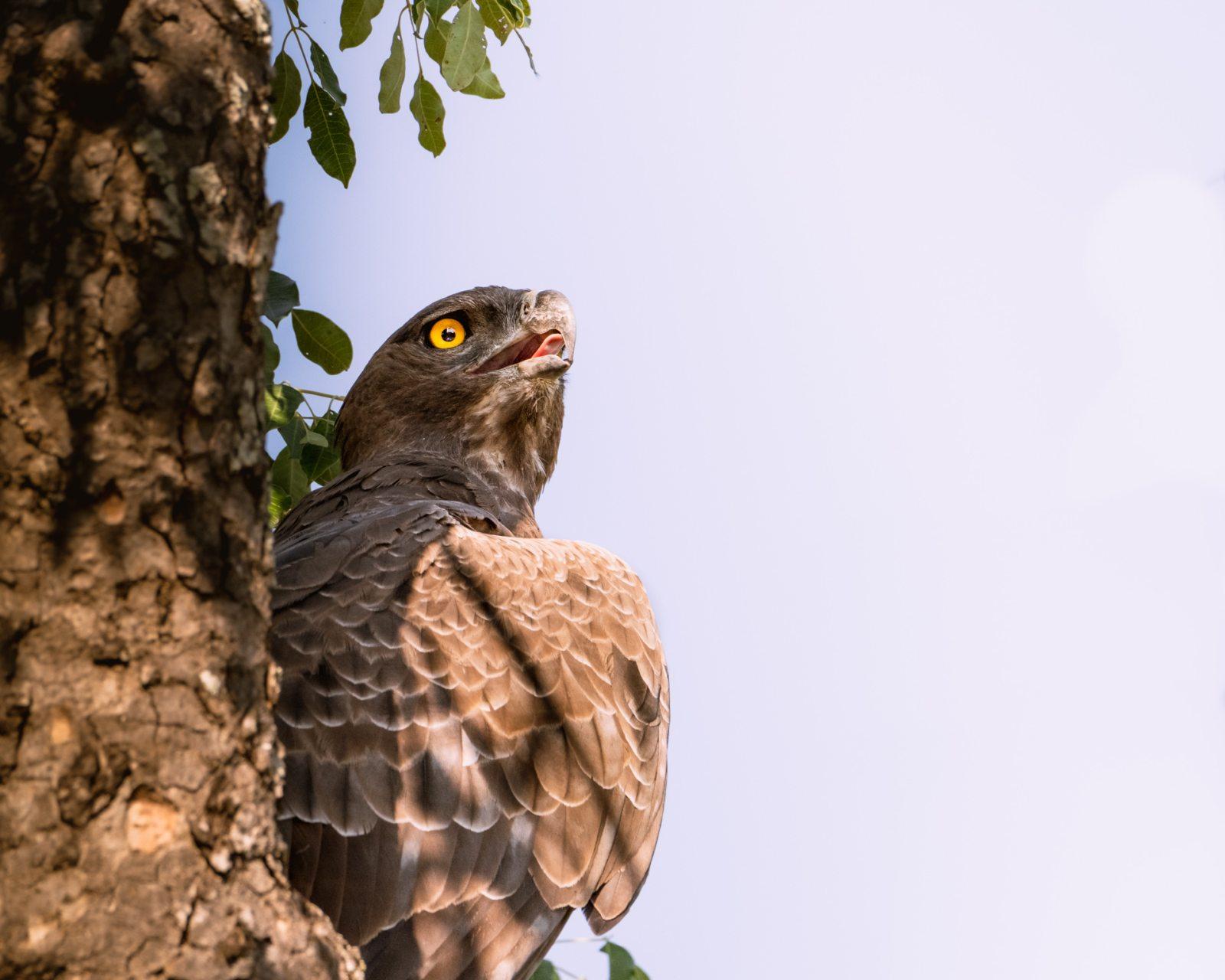
How did you get started in wildlife photography?
Growing up, I was always exposed to wildlife, as my father worked for the Natal Parks Board. We spent most school holidays in the reserves of South Africa. At a very young age, I was given my first film camera and from there it all progressed.
What do you believe makes for a great wildlife photograph?
I believe a great wildlife photograph should capture the animal or landscape in its most natural state – no staged shots and definitely not animals in zoos. It must reflect the raw essence of nature, with no intrusion or disturbance to the wildlife.
Have you ever had any close encounters with animals that got a bit hairy?
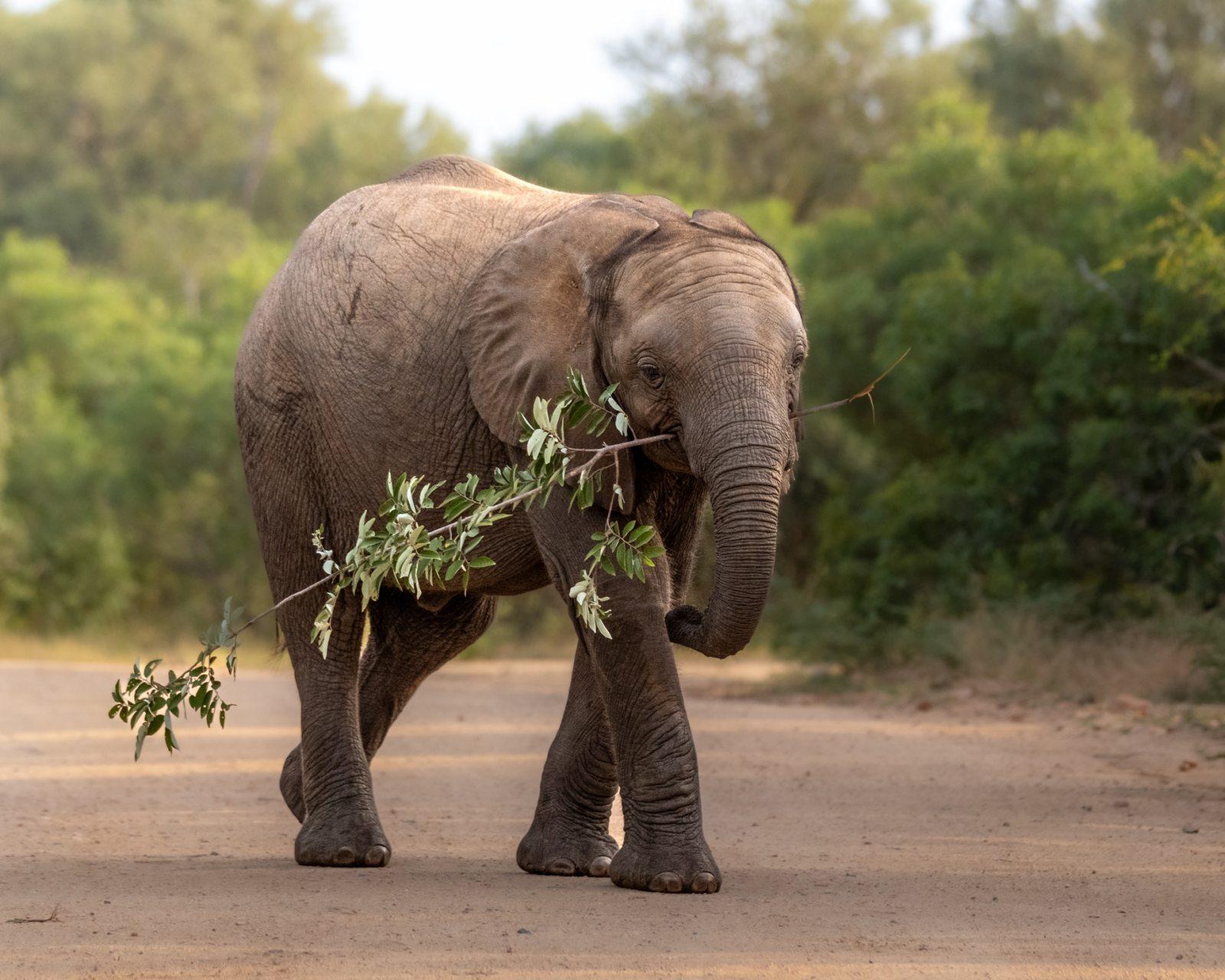
Yes, I was charged by an elephant in the Okavango Delta while in camp. I was standing near the campfire area just before sunset when he ambled into camp, unaware I was there. I had no option to retreat, as he was between me and the main deck. Unfortunately, a colleague who was with me decided to make a run for it which startled the big guy.
As he rounded a large fig tree and saw me, he decided to show me who was boss. The charge came out of nowhere, and I vividly remember the ranger shouting, “DON’T MOVE!” Somehow, I held my ground. In the moment, I was “talking” to him, saying, “It’s OK, I’m not here to hurt you.” He stopped about a metre from me, his huge tusks on either side of me, and just stood there.
I kept whispering quietly to him; it felt like an eternity. Eventually, he shook his massive head and ambled off into the Delta. I still remember the heat radiating off his body as he passed… and my trembling knees.
The guests and guide came down to congratulate me on not dying! The guide pulled me aside and whispered, “We thought you were a goner.”
Wow, that’s quite the encounter. What then has been your favourite sighting? Did you manage to capture it?
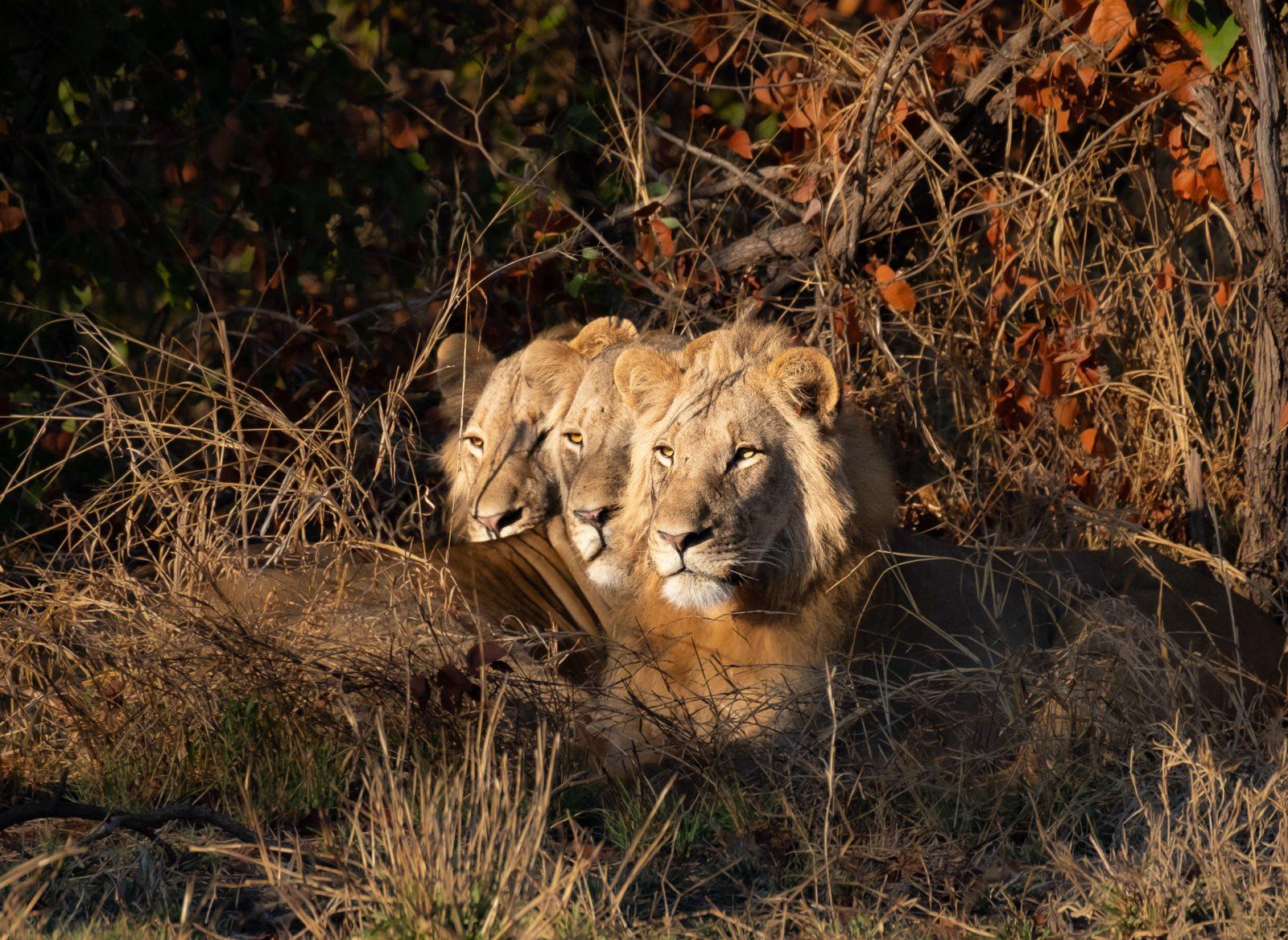
One of my favourite sightings was an encounter between a young male leopard and a huge male lion. The leopard had stashed a kill up in a mopani tree, but to his dismay, a male lion arrived and settled below it. The carcass wasn’t very secure and eventually fell from the tree, much to the lion’s delight. He tucked in for lunch and, after eating his fill, wandered off a few metres and promptly fell asleep.
After about an hour, the leopard cautiously descended the tree to reclaim what was left of his meal. The lion, hearing movement, instantly went into hunt mode. He stalked the leopard right in front of us and managed to get alarmingly close before pouncing. Luckily, being as agile as they are, the leopard narrowly escaped and shot up the nearest mopani tree, leaving the lion to polish off the remains.
Unfortunately, I only managed a few shots of the scene, as I was using a smaller and less capable camera setup at the time.
What camera do you use, and do you have a favourite lens when out in the bush?
Fujifilm became my go-to camera in 2018. I started with the X-T20 and the standard kit lenses that it came with, from there I upgraded to the X-H2 and XF100-400mmF4.5-5.6 lens – my absolute favourite. For my next trip to the bush, I’m hoping to try the new Fujinon XF150-600mmF5.6-8.
Black and White or Colour, and do you use Film Simulations?
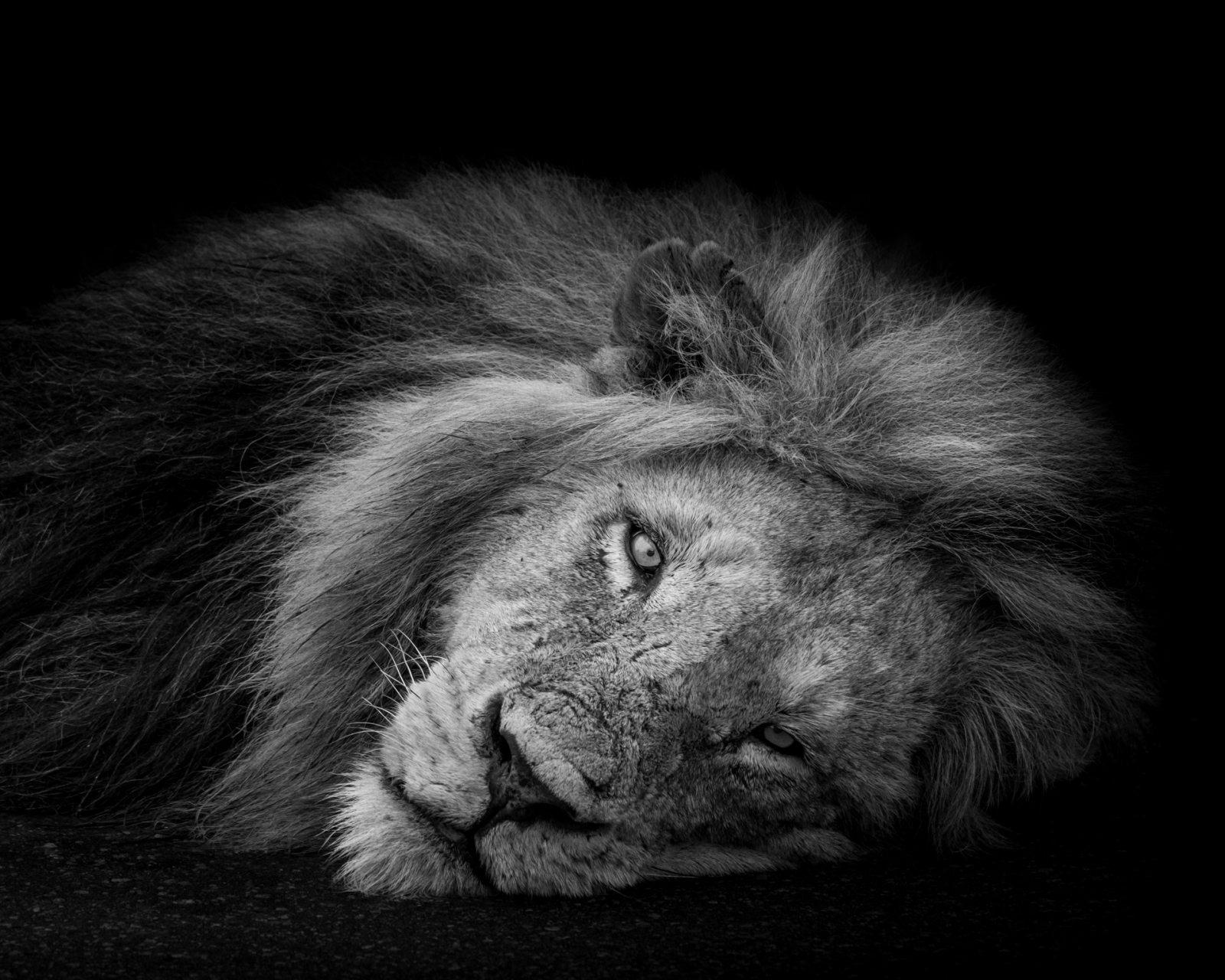
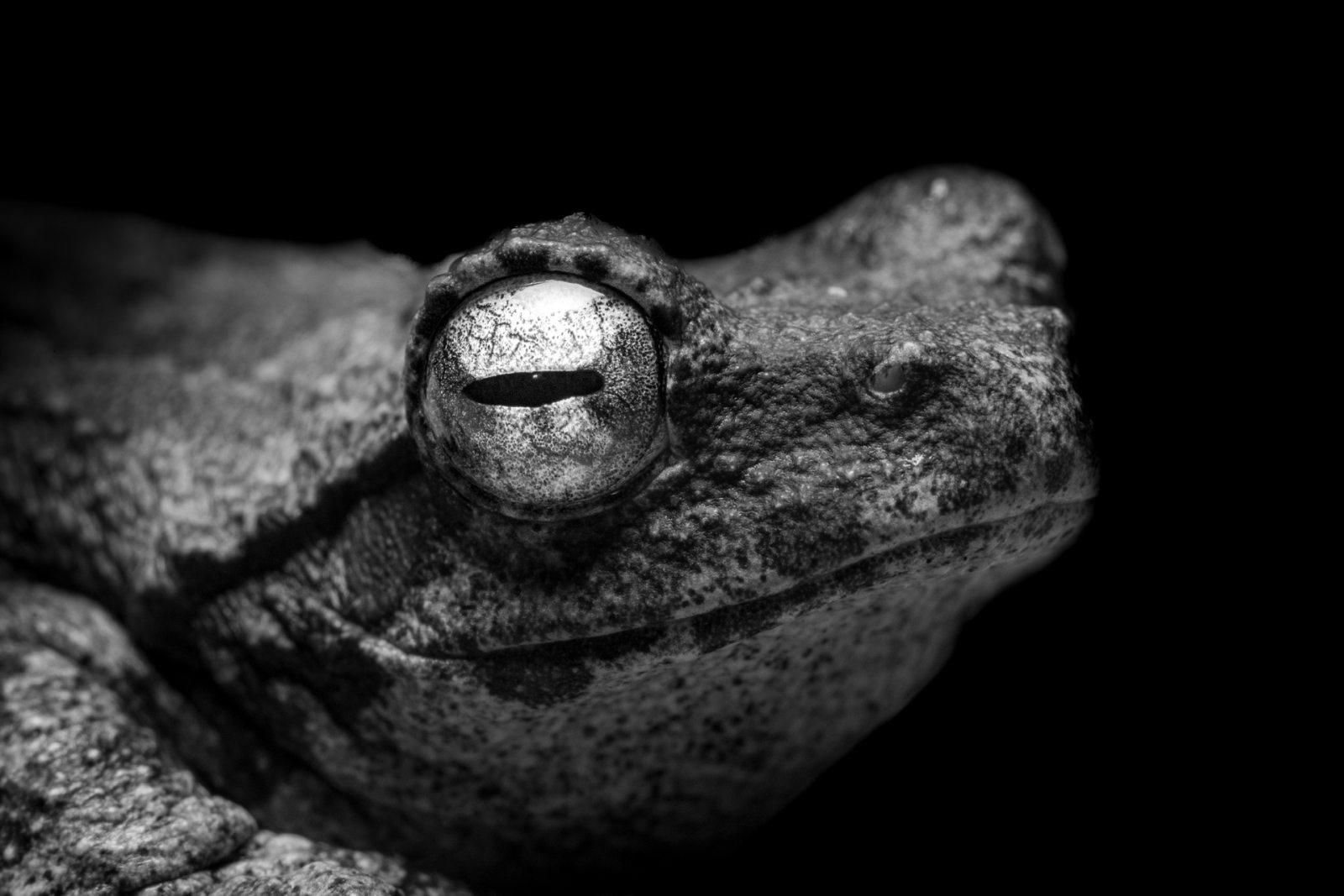
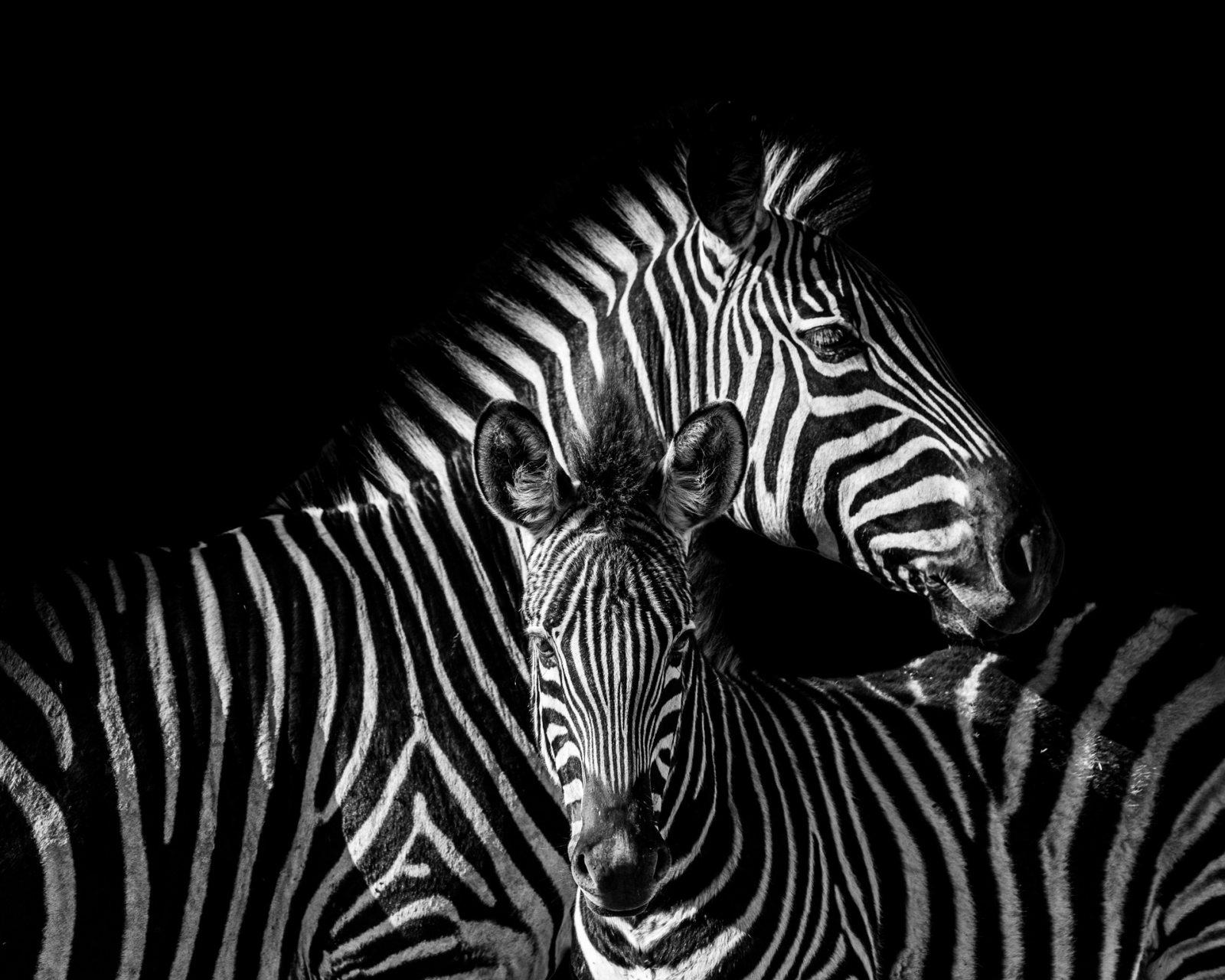
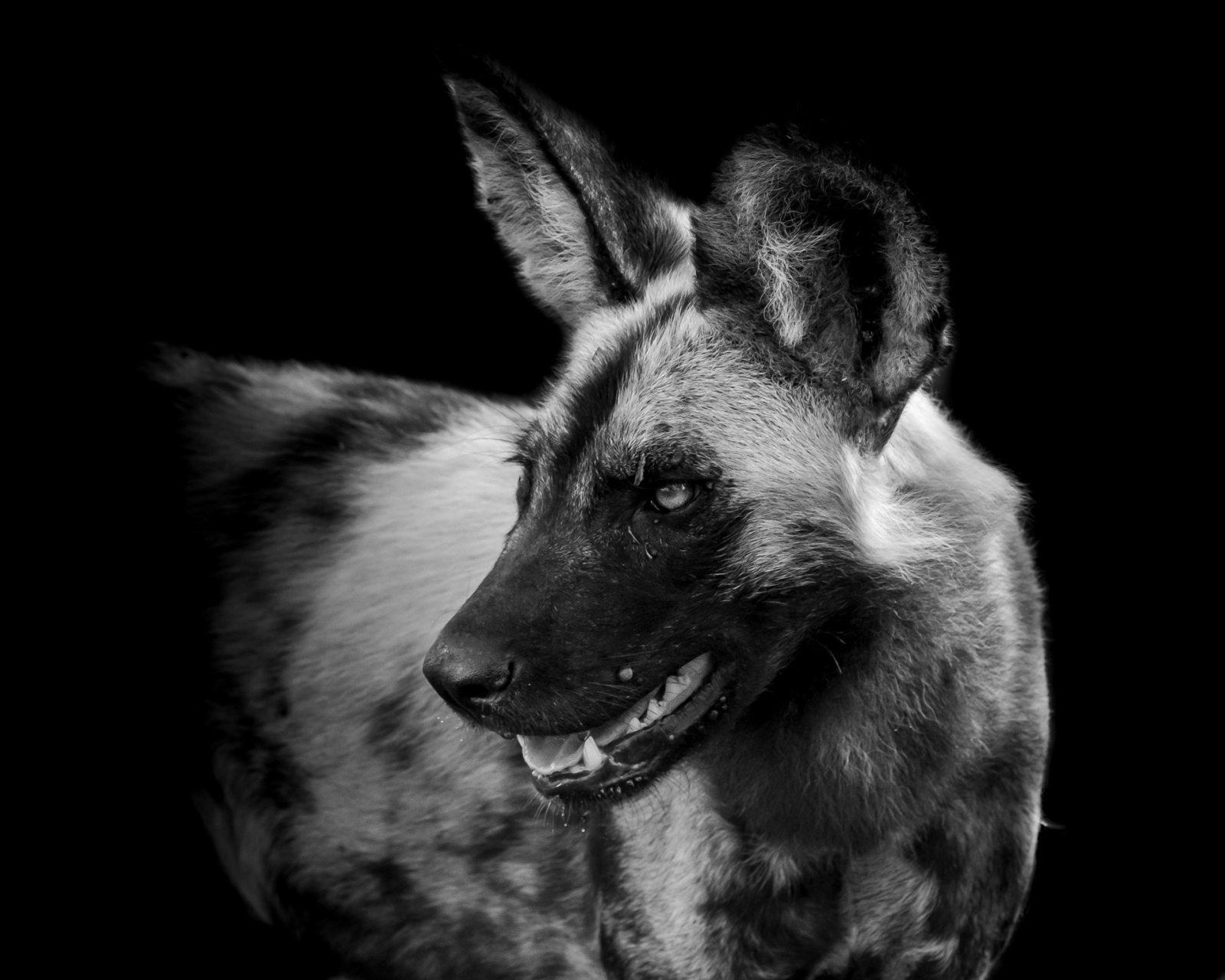
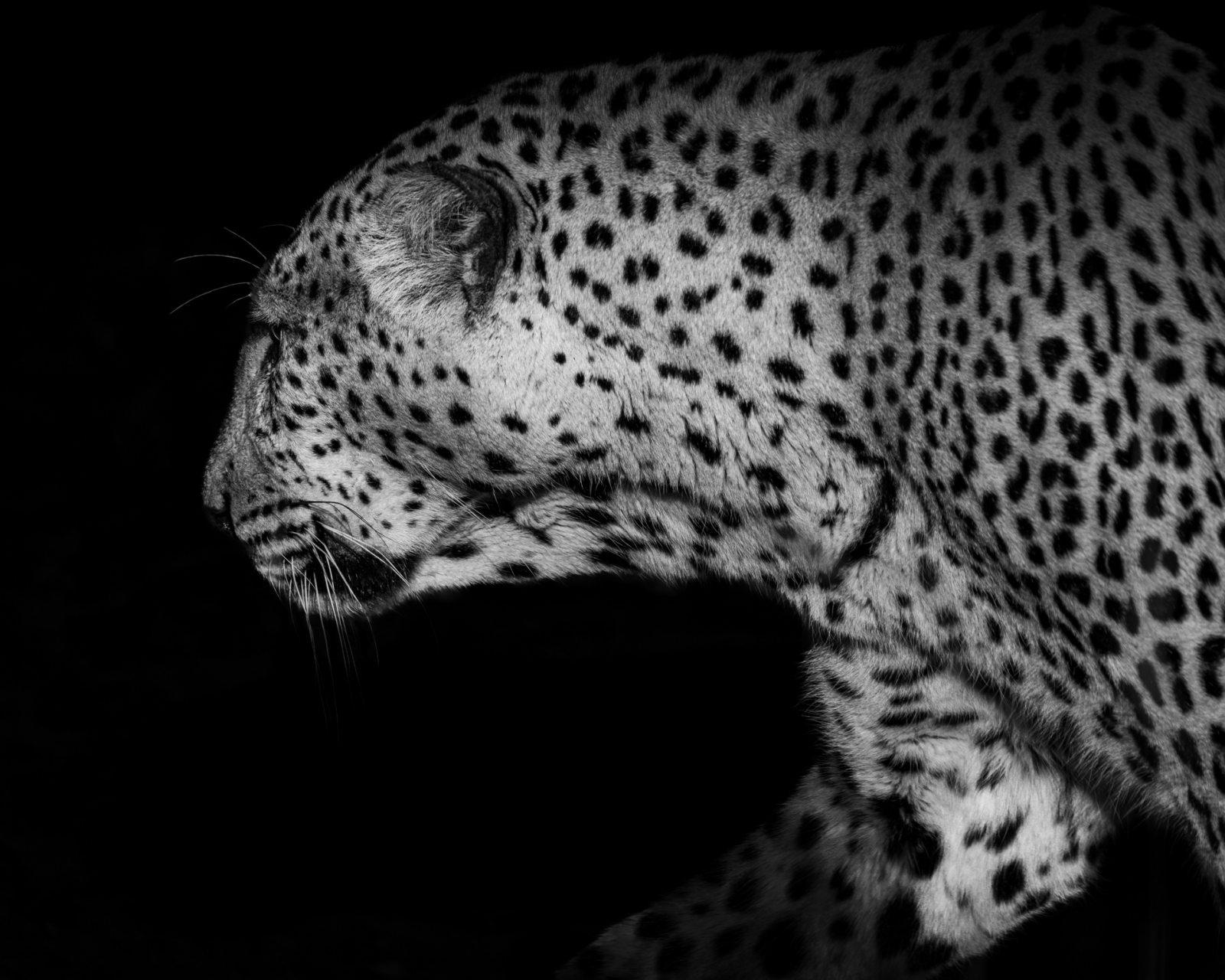
I enjoy both. Fine art black and white is a stunning way to showcase wildlife photography; it creates a dramatic atmosphere and allows you to focus on the fine details. Colour on the other hand tells its own story, especially considering the incredible variety of hues found in African wildlife – particularly birds. I rarely use Film Simulations as I shoot in RAW.
You also have a few gorgeous macro shots. Tell us more about the equipment you use for this.
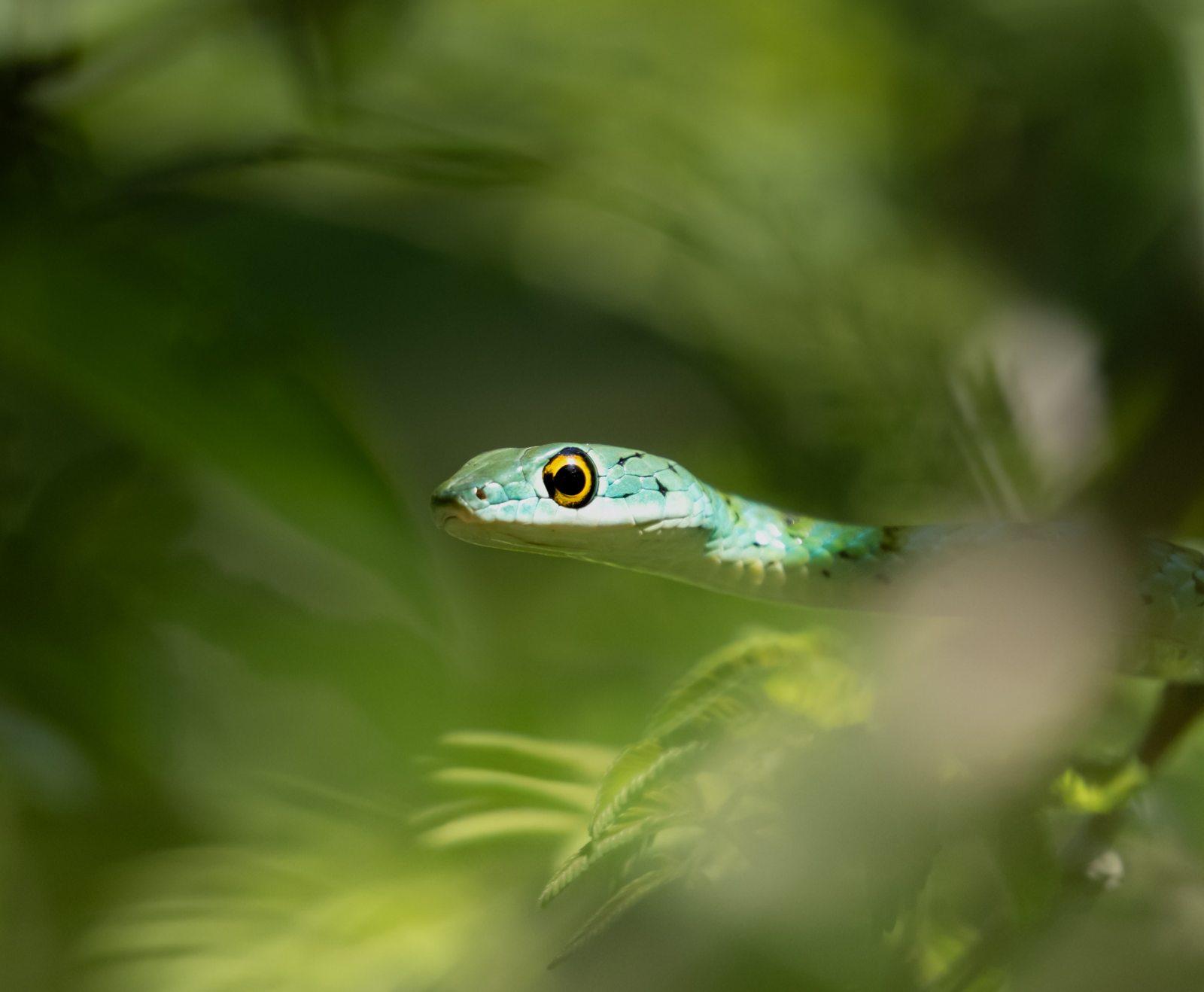
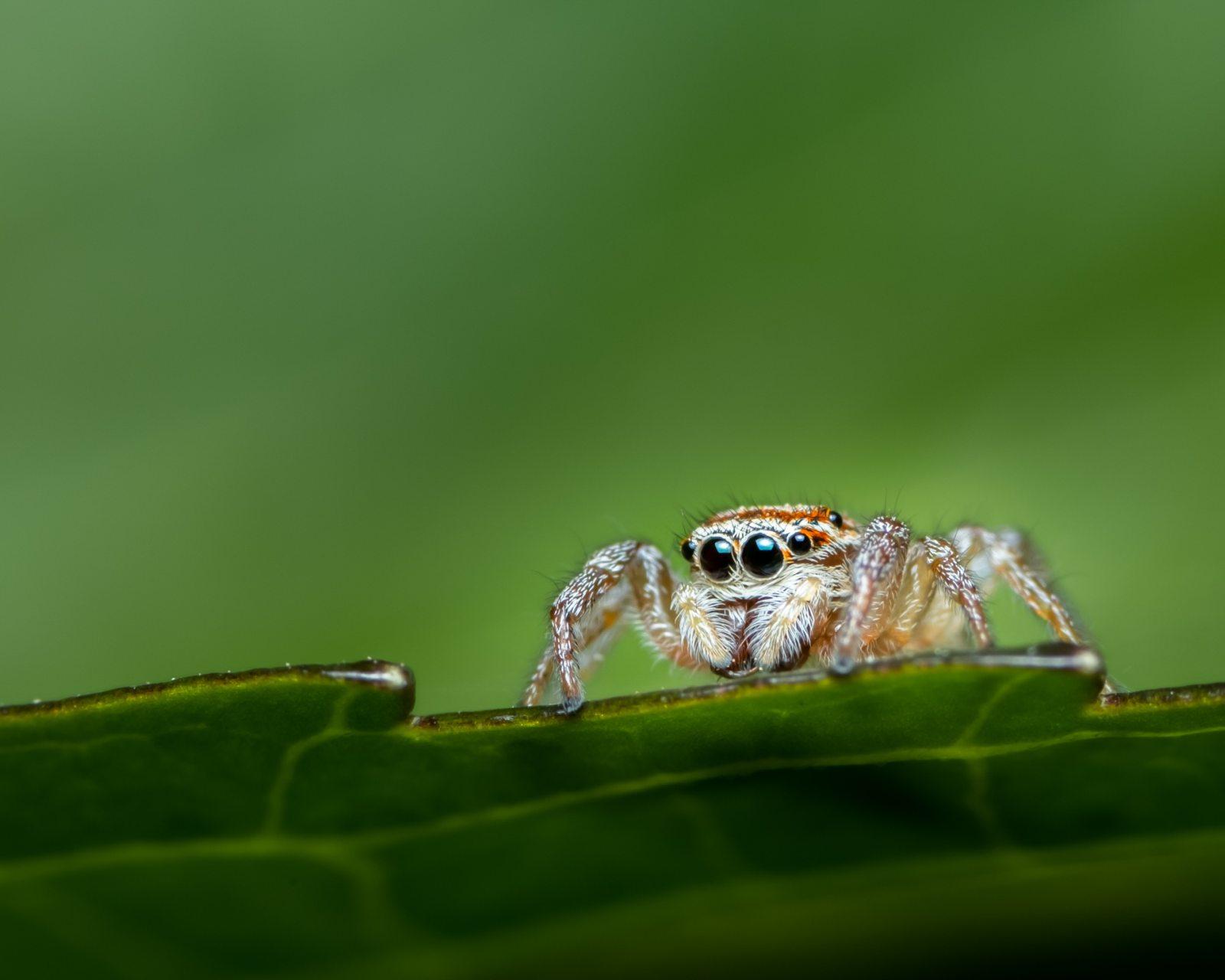
Thank you! For my macro shots, I use the X-H2 with a 60mm f/2.8 lens. It’s not a Fujifilm lens, but at the time it was what I could afford. It’s a manual focus macro lens, so a steady hand is needed. For lighting, I use a Godox flash with a homemade diffuser. The Fujinon macro lenses look incredible and soon enough I will add one to the camera bag.
Do you have a bucket list animal and destination?
I’ve travelled across much of Africa and worked in many African countries, but the Okavango Delta remains one of my favourite places. It’s definitely on my bucket list to take my family there. As for animals, my bucket list species is the caracal – they’re my absolute favourite. I’ve seen them a few times, but I’ve never had the opportunity to photograph one.
Where can people find more of your work?
All my photos are shared on Instagram and through our company website. We plan safaris and tours in South Africa for clients from Europe and all over the world.
- @kyleblewitt_photography
- @elephant_expeditions
- elephant-expeditions.com